

Flash Floods ARE Being Caused By Climate Change
Warmer Air Holds More Water - and Drops More Intense Rainfall

Flash floods are nothing new, but they are certainly becoming more frequent and more intense.
Hydrologists stress that single events have many drivers, yet the fingerprint of a warming climate is evident - slow-moving, moisture-rich summer systems are becoming more common.
Quite simply, warmer air holds more water, making today’s downpours heavier than those in the historical record.
I won’t share a latest death toll count for the Texas Hill Country flash flood of July 4, because tragically, there are still hundreds unaccounted for as I write. I do not need to expand on the unimaginable horrors of the situation, and the grief of those who have lost loved ones, many of them children.
But sadly, we are going to see this happen more and more. And yes, we have been warned. And no, we’re not doing enough to stop it happening again.
Since the Texas deluge, flash-flood emergencies struck across four continents within 72 hours.
HIMACHAL PRADESH, INDIA — July 7
Torrential monsoon downpours unleashed at least 23 flash-floods, 19 cloudbursts and 16 landslides across the Himalayan state over the weekend, severing highways and sweeping away homes perched on steep slopes.
At least 78 people had died, with dozens more missing, as this was written - with entire hamlets still unreachable after bridges buckled and power lines collapsed.
Meteorologists recorded up to 200mm of rain falling in just a few hours in some valleys — the kind of cloudburst locals used to see once a decade, but which has occurred 19 times in two days.
Again, experts blame a warmer atmosphere that now holds more moisture and releases it in violent bursts, while rapid urban expansion is stripping natural drainage from the mountains. Studies show India’s cities are heating almost twice as fast as rural areas, amplifying monsoon extremes.
ISLAMABAD, PAKISTAN — July 8
Heavy monsoon rain sweeping the length of Pakistan has killed dozens since June 26, according to the National Disaster Management Authority, with the past few days bringing the worst flash-flooding so far.
Climate minister Musadiq Malik called the situation a “crisis of injustice”, noting that Pakistan, responsible for less than one percent of global emissions, tops the 2025 Climate Risk Index after the record-breaking 2022 deluge.
RASUWA DISTRICT, NEPAL-CHINA BORDER — July 8
A nighttime surge on the Bhote Koshi River tore out the steel “Friendship Bridge”, the only all-weather link between Nepal and Tibet, and hurled trucks and shipping containers downstream.
As fatalities continued to be counted, hydrologists claimed the flood was triggered by an overflowing glacial lake in Tibet after intense rain — a risk that is rising as Himalayan glaciers retreat and new, unstable lakes form in the high valleys.
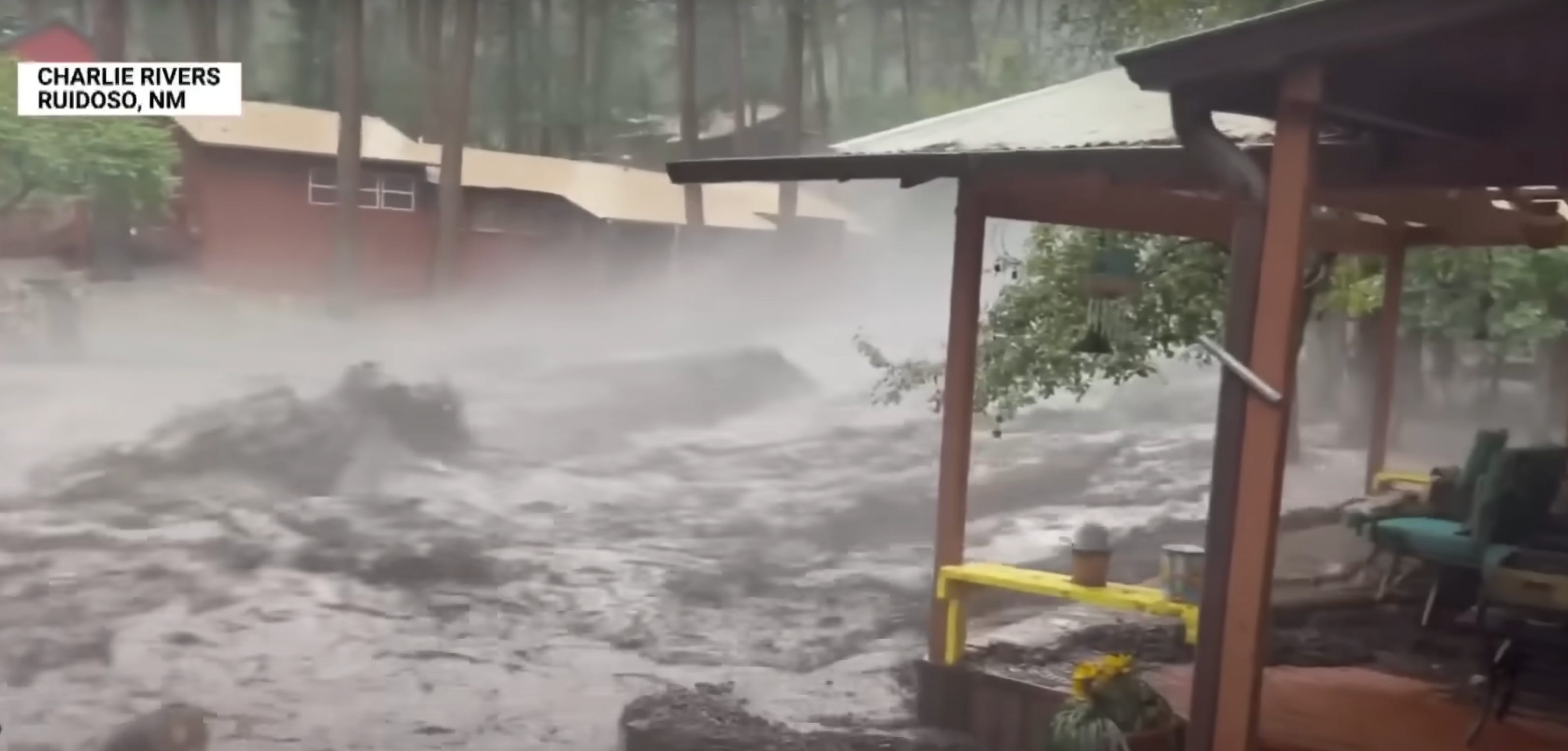
RUIDOSO, NEW MEXICO, USA — July 8
More lives were claimed as the U.S. was hit again, when a thunderstorm over the South Fork burn scar created a wall of water through the Rio Ruidoso, sending the gauge from 1ft to a provisional record 20.24 ft in under two hours.
Scientists note that rising temperatures are lengthening fire seasons in the U.S. Southwest. Burn scars then become hydrophobic, dramatically amplifying flash-flood risk during the increasingly erratic summer monsoon.